
Everything you need to have a flourishing fall herb garden
Fall can be an excellent time to grow herbs because cooler temperatures and shorter days often create less stressful growing conditions for many herb varieties. Planting during the cooler months may help herbs establish strong root systems while avoiding some of the intense heat and pest pressure common during summer. A well-planned fall garden can continue producing fresh herbs for culinary and medicinal use while extending the gardening season. For many gardeners, fall planting also provides a valuable head start on the following spring, allowing plants to become established before new growth begins.
Why Fall Is One of the Best Seasons for Growing Herbs
Fall is one of the best seasons for growing herbs because cooler temperatures often create less stressful conditions for young plants. During early fall, the soil remains warm from late summer, which can encourage strong root development while the cooler weather supports steady growth above ground. As season changes bring milder temperatures and, in some regions, mild winters, many herbs can continue growing well beyond the traditional summer gardening season. A fall garden also benefits from fewer pests and reduced heat stress, making it a great time for planting and establishing herbs for future harvests.
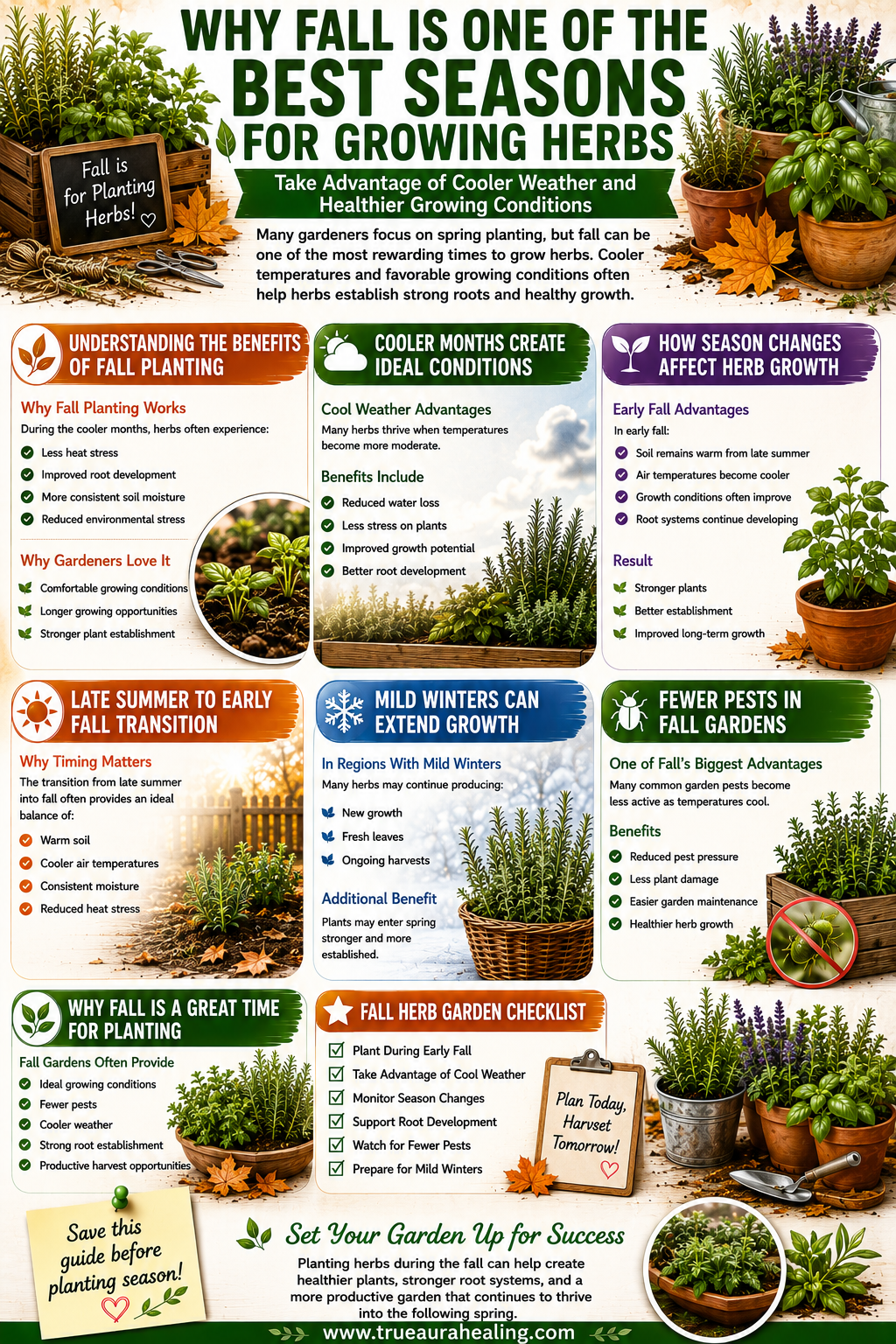
Fall herb gardening infographic explaining the benefits of fall planting, cooler weather, fewer pests, root development, mild winters, and how seasonal changes support healthy herb growth.
Choosing the Right Fall Herbs
Selecting the right herbs is one of the most important steps in creating a productive fall herb garden. Perennial herbs can provide long-term value by returning the following spring, while annual herbs offer seasonal harvests of fresh herbs throughout the cooler months. Culinary herbs are popular for adding flavor to savory dishes, while medicinal herbs can bring fragrance, beauty, and versatility to the home garden. Popular fall herb choices such as lemon balm and lemon verbena are valued for their fragrant leaves and can be a great addition to a variety of garden spaces.
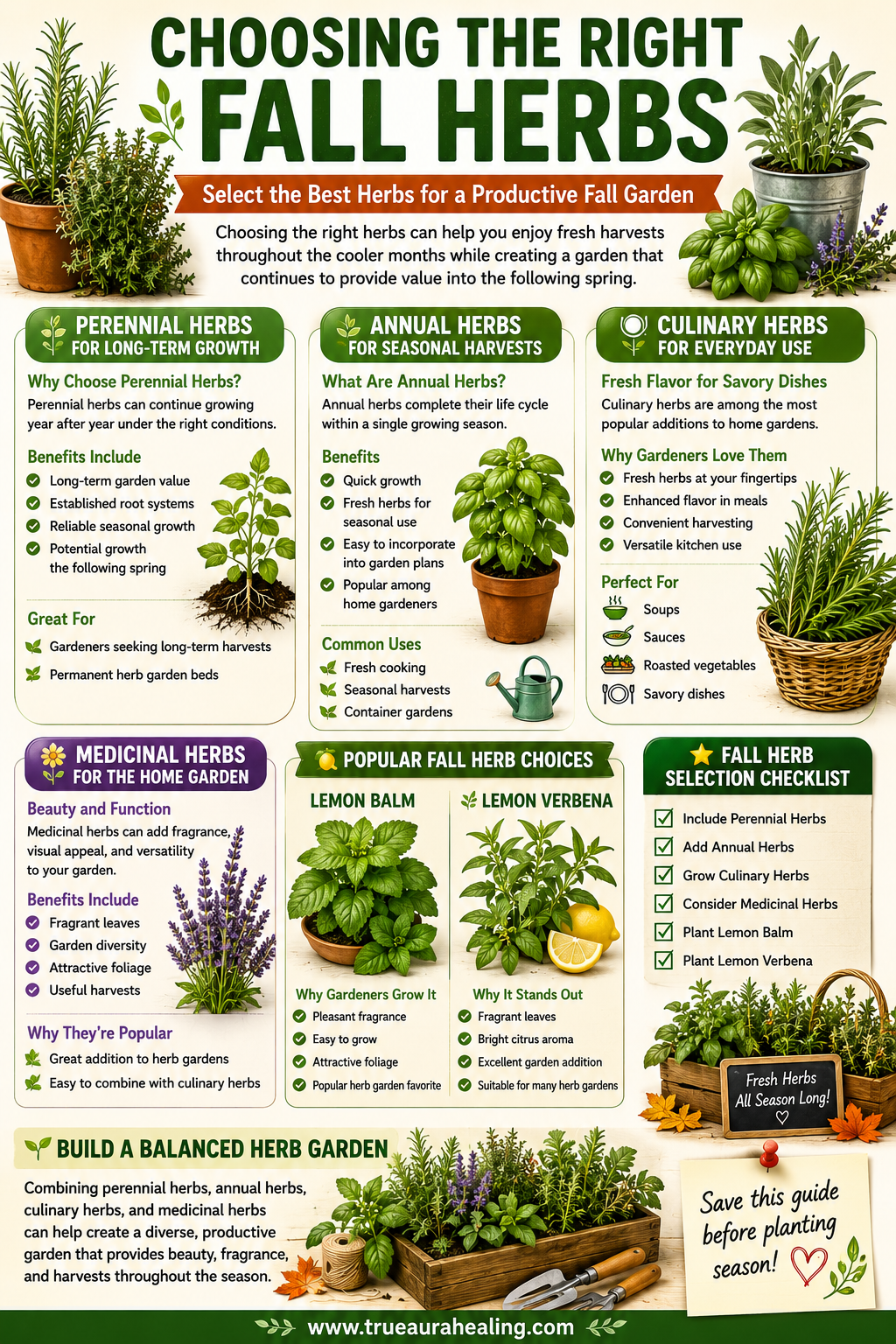
Fall herb selection infographic featuring perennial herbs, annual herbs, culinary herbs, medicinal herbs, lemon balm, and lemon verbena for productive fall herb gardens.
Creating Ideal Growing Conditions
Creating ideal growing conditions is one of the most important factors in developing a flourishing fall herb garden. Most herbs prefer well-drained soil enriched with organic matter, making proper soil preparation essential for healthy plant roots and long-term growth. Many herb varieties perform best in full sun and require several hours of sunlight each day to produce abundant foliage and strong growth. In warmer regions, however, partial shade may provide ideal conditions by protecting herbs from excessive afternoon heat while still allowing them to thrive.
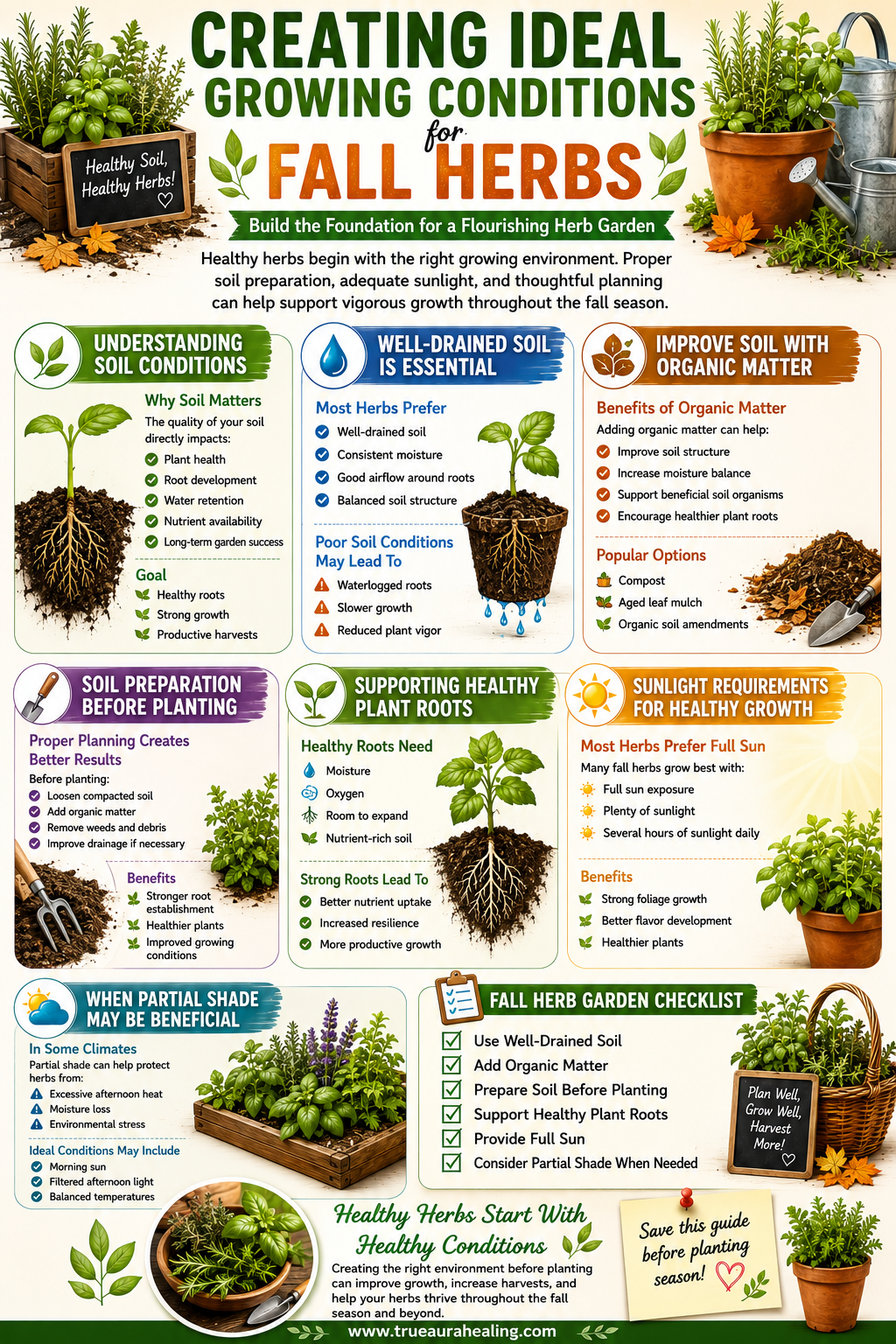
Fall herb growing conditions infographic showing well-drained soil, organic matter, soil preparation, healthy roots, sunlight requirements, and partial shade recommendations for herb gardens.
Growing Herbs in Garden Beds and Containers
Growing herbs in garden beds and containers allows gardeners to create a productive fall herb garden regardless of available space. Raised beds are a popular option because they often provide better protection from poor soil conditions while promoting well-drained soil and healthy root development. Herb garden planters and smaller pots offer flexibility for patios, balconies, and other compact growing areas, especially when containers include adequate drainage holes. Whether planted in beds or containers, choosing a setup that provides easy access can make harvesting, maintenance, and everyday use more convenient in the home garden.
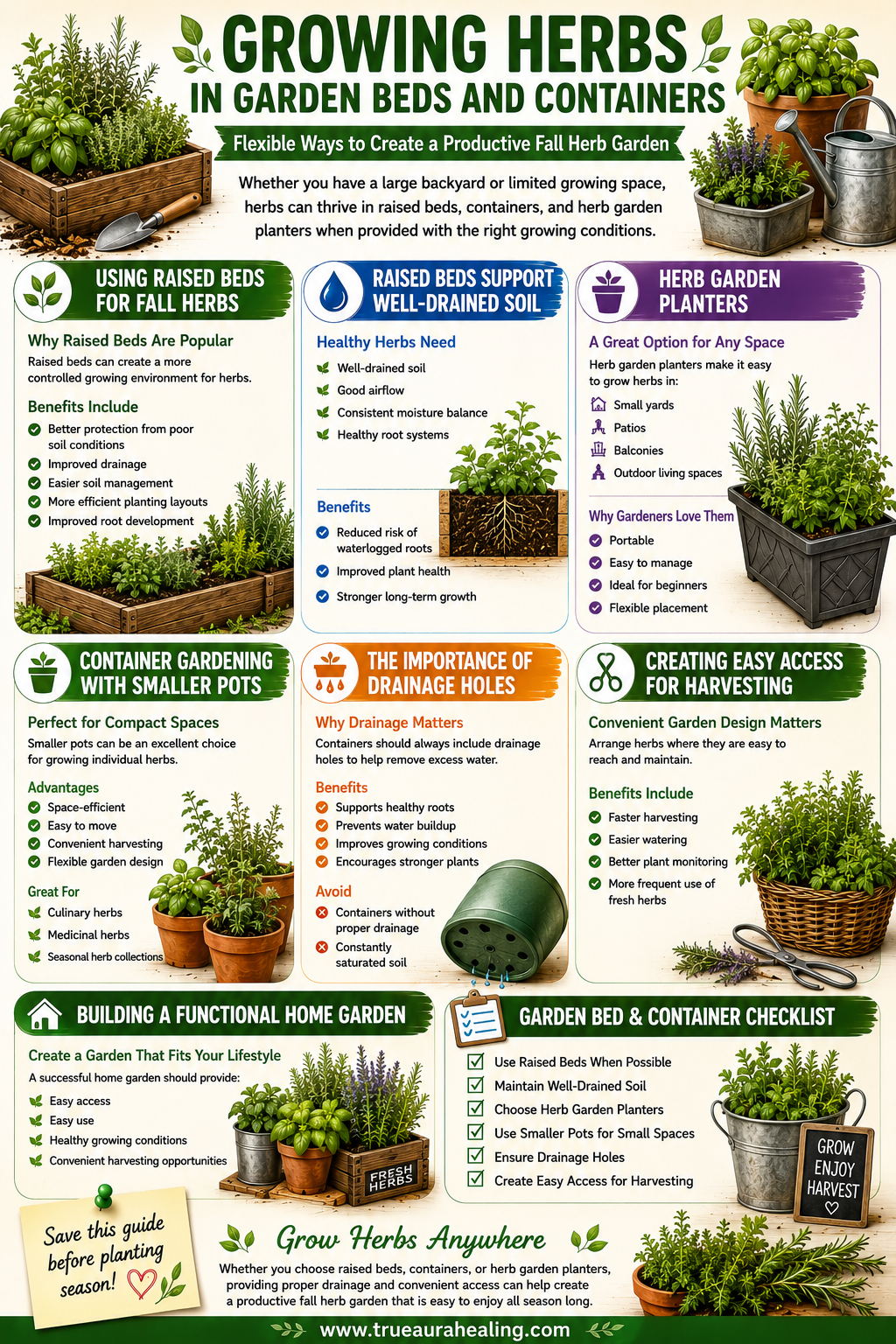
Fall herb gardening infographic featuring raised beds, herb garden planters, container gardening, drainage holes, well-drained soil, and harvesting tips for growing herbs in any space.
Protecting Herbs During Cooler Weather
Protecting herbs during cooler weather can help extend harvests and maintain healthy growth throughout the fall season. A light frost may damage tender new growth, so monitoring temperatures during the cool season is important for preventing unnecessary plant stress. In areas prone to hard freezes, providing better protection and paying attention to weather forecasts can help gardeners prepare before temperatures drop significantly. Cold frames are another useful tool that can shield herbs during the cooler months, creating a more stable environment and supporting proper care throughout the season.
Caring for a Flourishing Fall Herb Garden
A flourishing fall herb garden requires ongoing attention throughout the season to support healthy new growth and strong plant roots. Proper care, including consistent watering, occasional feeding, and routine inspections, can help herbs remain productive as temperatures begin to cool. Regularly pruning herbs encourages fresh growth, maintains attractive fragrant leaves, and can increase the quality of fall harvests. Monitoring weather forecasts and paying attention to season changes allows gardeners to prepare for cool weather and protect herbs from sudden temperature fluctuations.
Harvesting and Storing Fresh Herbs
One of the most rewarding parts of growing herbs is enjoying fresh fall harvests throughout the season. Fresh herbs can be used immediately in culinary herbs recipes, adding flavor and aroma to soups, sauces, roasted vegetables, and other seasonal dishes. To preserve herbs for future use, proper storage is essential to maintain quality and freshness. Once dried or prepared, storing herbs in an airtight container makes them easy to access and a great addition to your kitchen year-round.
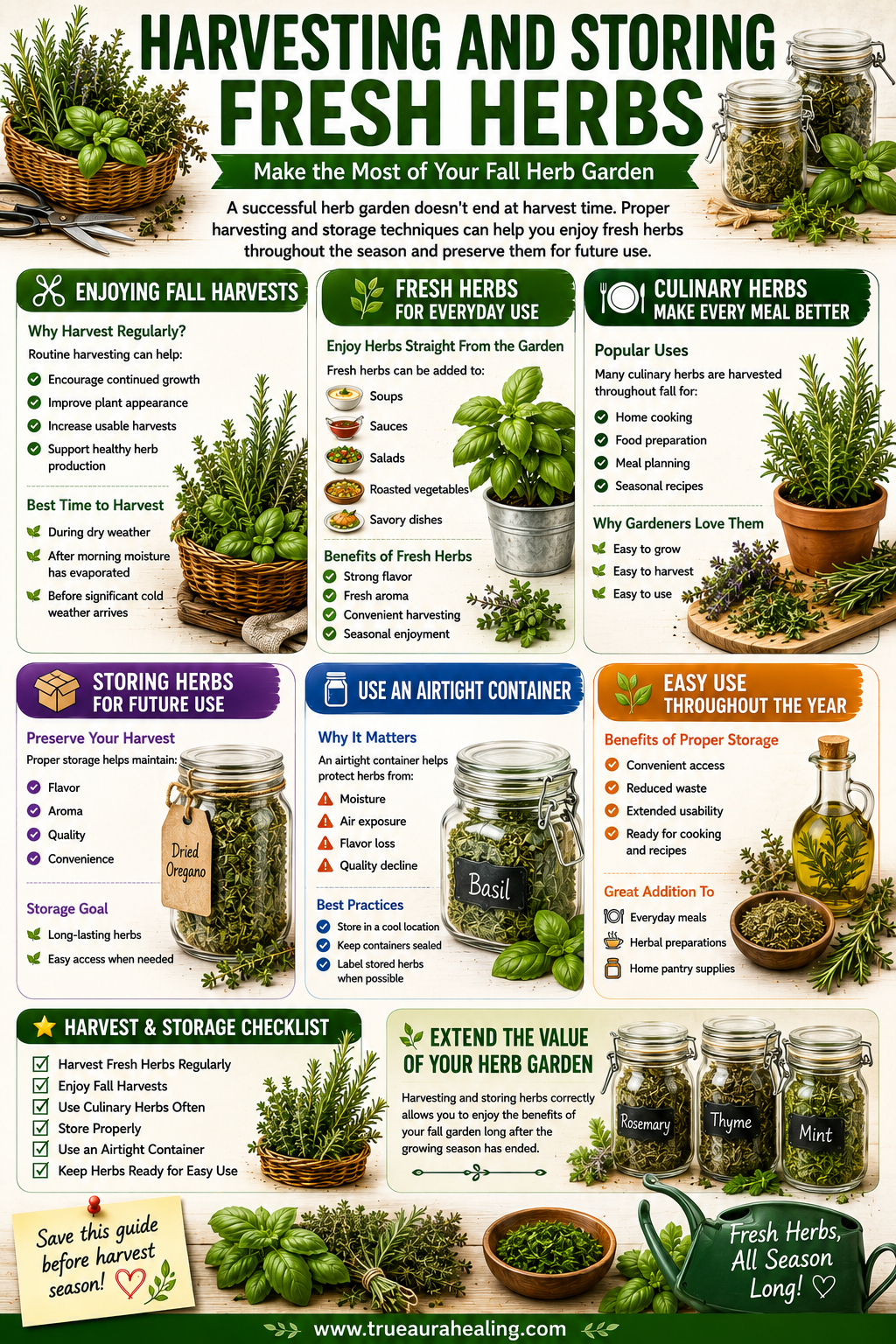
Herb harvesting and storage infographic showing fresh herbs, culinary herb uses, harvesting techniques, airtight storage containers, and methods for preserving herbs for future use.
Designing a Fall Herb Garden for Any Space
A thriving fall herb garden can be created in almost any space with proper planning and the right growing setup. Gardeners working with limited space can successfully grow herbs in smaller pots, herb garden planters, or compact raised beds while still enjoying productive harvests. Designing a home garden with easy access makes watering, harvesting, and maintenance more convenient throughout the season. Whether you're a complete beginner or a seasoned green thumb, selecting great choices for your growing conditions can help ensure a successful and rewarding herb garden.
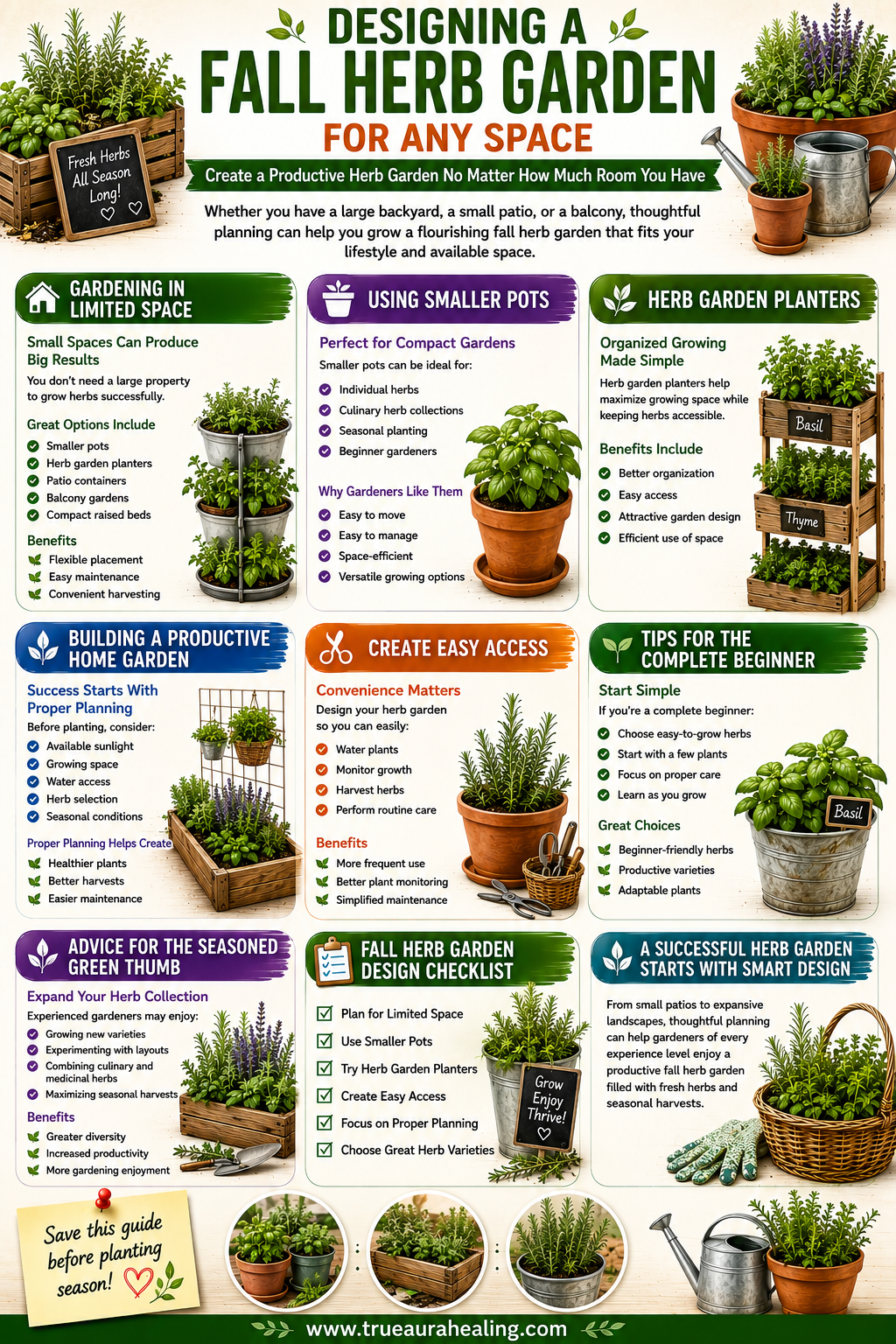
Fall herb garden design infographic featuring small-space gardening, herb garden planters, container herbs, patio gardens, beginner herb gardening tips, and productive home garden layouts.
Creating a flourishing fall herb garden begins with choosing the right fall herbs and providing the growing conditions they need to thrive. The cooler months offer an excellent opportunity to establish healthy plants in well-drained soil while enjoying reduced pest pressure and productive growth. With proper care, regular maintenance, and thoughtful planning, gardeners can enjoy fresh herbs and abundant fall harvests throughout the season. Whether you're growing in containers, raised beds, or a traditional home garden, success comes from creating a strong foundation and adapting your garden to local conditions.