
Get essential oils if you have and need to repel aphids
Aphids are among the most common garden pests, affecting everything from fruit trees and vegetable gardens to indoor plants and ornamental flowers. These small, soft-bodied insects reproduce quickly and can damage plants by feeding on new growth, weakening stems, and contributing to plant stress. As more gardeners look for ways to reduce their reliance on harsh chemicals, natural pest control methods have become increasingly popular. Essential oils are often included in garden pest management strategies because they may help deter aphids while supporting a more natural approach to protecting plants throughout the growing season.
Understanding Aphid Problems
Aphids are small, soft-bodied insects that feed on plant sap and can reproduce rapidly under favorable conditions. What may begin as a few insects can quickly turn into an aphid invasion, leading to an infestation that affects the overall health of a plant. Aphids can weaken plants, reduce crop yield, and contribute to the spread of plant diseases and fungal diseases. They commonly affect fruit trees, indoor plants, delicate plants, and many other plant species found in home gardens and landscapes.
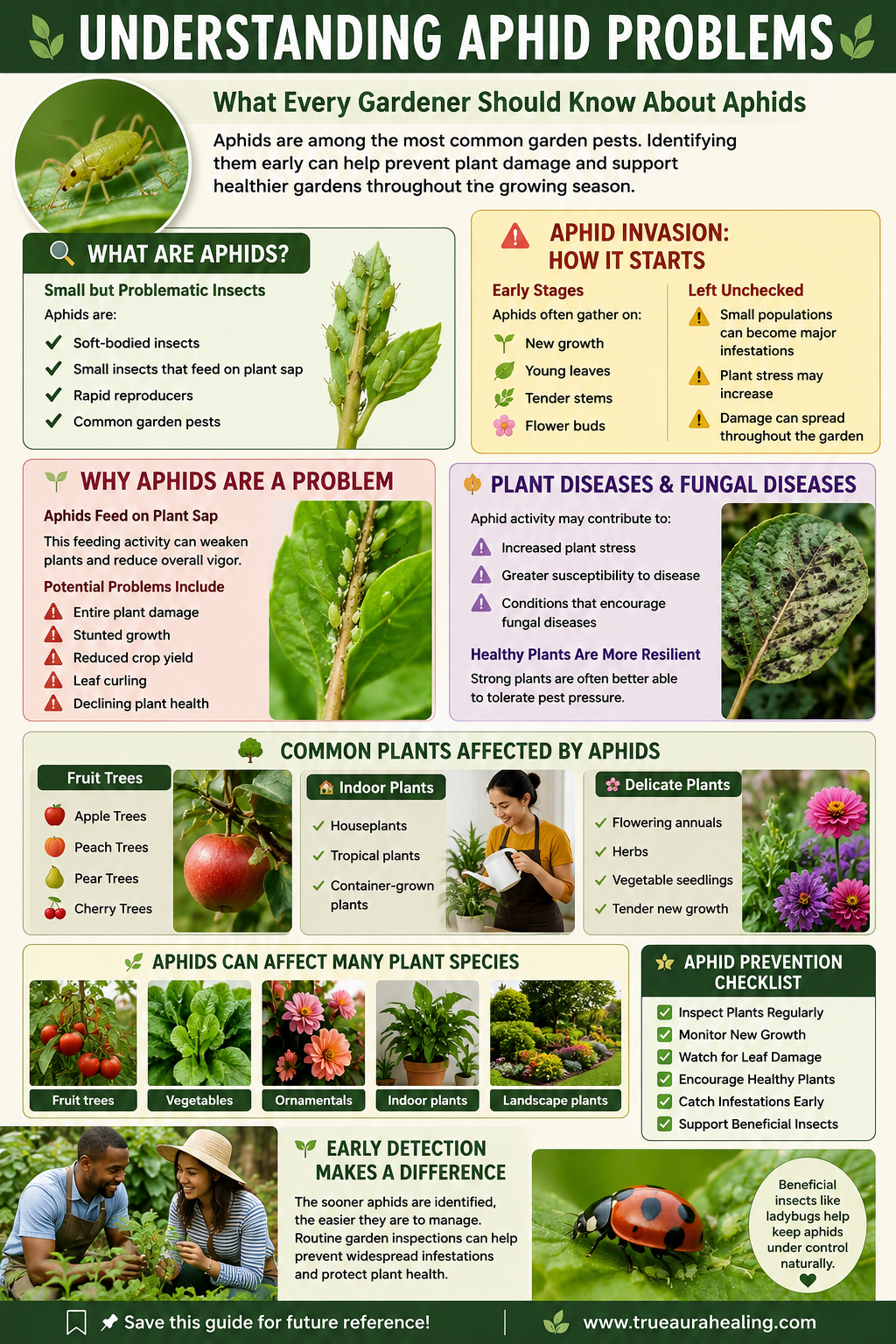
Aphid identification infographic showing soft-bodied insects on leaves, signs of aphid infestations, common plant damage, fruit trees affected by aphids, and early detection tips for preventing garden pest problems.
How Essential Oils May Help With Aphid Control
Essential oils are often used as part of a natural approach to garden pest control because many contain compounds that may help deter unwanted insects. Gardeners frequently incorporate natural oils and plant extracts into homemade sprays as an alternative to harsh chemicals and synthetic pesticides. While essential oils are not a guaranteed solution for every infestation, they can be a useful component of an integrated aphid control strategy. Some of the most effective essential oils are valued for their natural insect repellent properties and their ability to support a healthier, more environmentally friendly garden.
Best Essential Oils for Aphids
Several essential oils are commonly used in natural gardening practices to help manage aphid populations. Peppermint oil (Mentha x piperita), neem oil spray derived from the seeds of the neem tree, tea tree oil, lemon eucalyptus, orange essential oils, and clove oil are among the most popular options. These oils are valued for their natural insect repellent or insecticidal properties and are often incorporated into homemade garden sprays. While results can vary, many gardeners use these plant-based solutions as part of a broader aphid control strategy that includes regular monitoring and healthy garden maintenance.
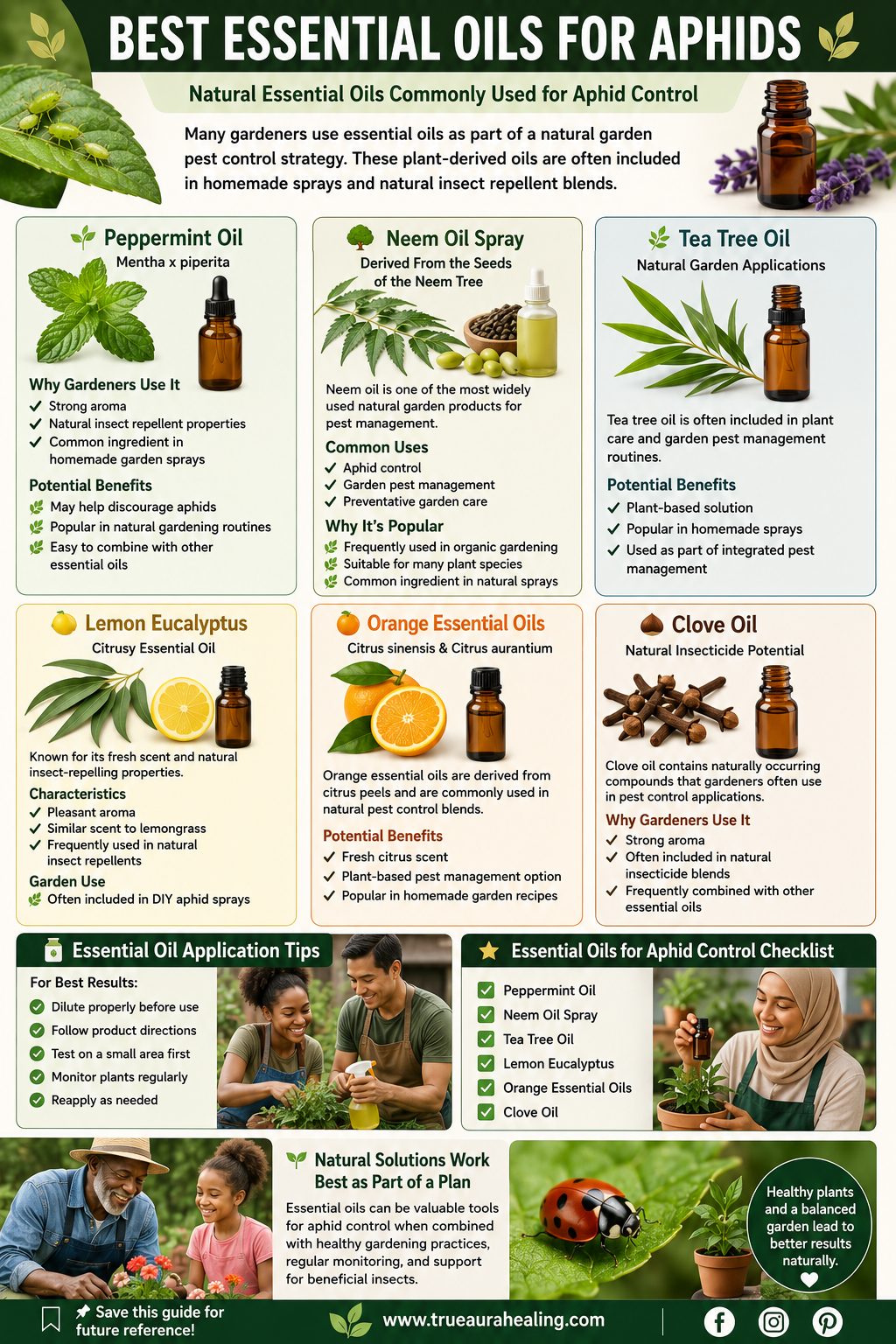
Essential oils for aphid control infographic featuring peppermint oil, neem oil spray, tea tree oil, lemon eucalyptus, orange essential oils, and clove oil used in natural garden pest management.
How to Make Homemade Aphid Spray
Many gardeners create homemade aphid spray as a simple and natural way to manage aphid populations. A basic DIY aphid spray often combines water, a small amount of liquid soap, and selected natural ingredients to help improve contact with pests. When using a spray bottle, it is important to apply the foliar spray directly to affected areas and ensure thorough coverage of the entire plant. Pay special attention to the undersides of leaves, where aphids frequently gather, and consider making applications in the early morning when conditions are typically cooler.
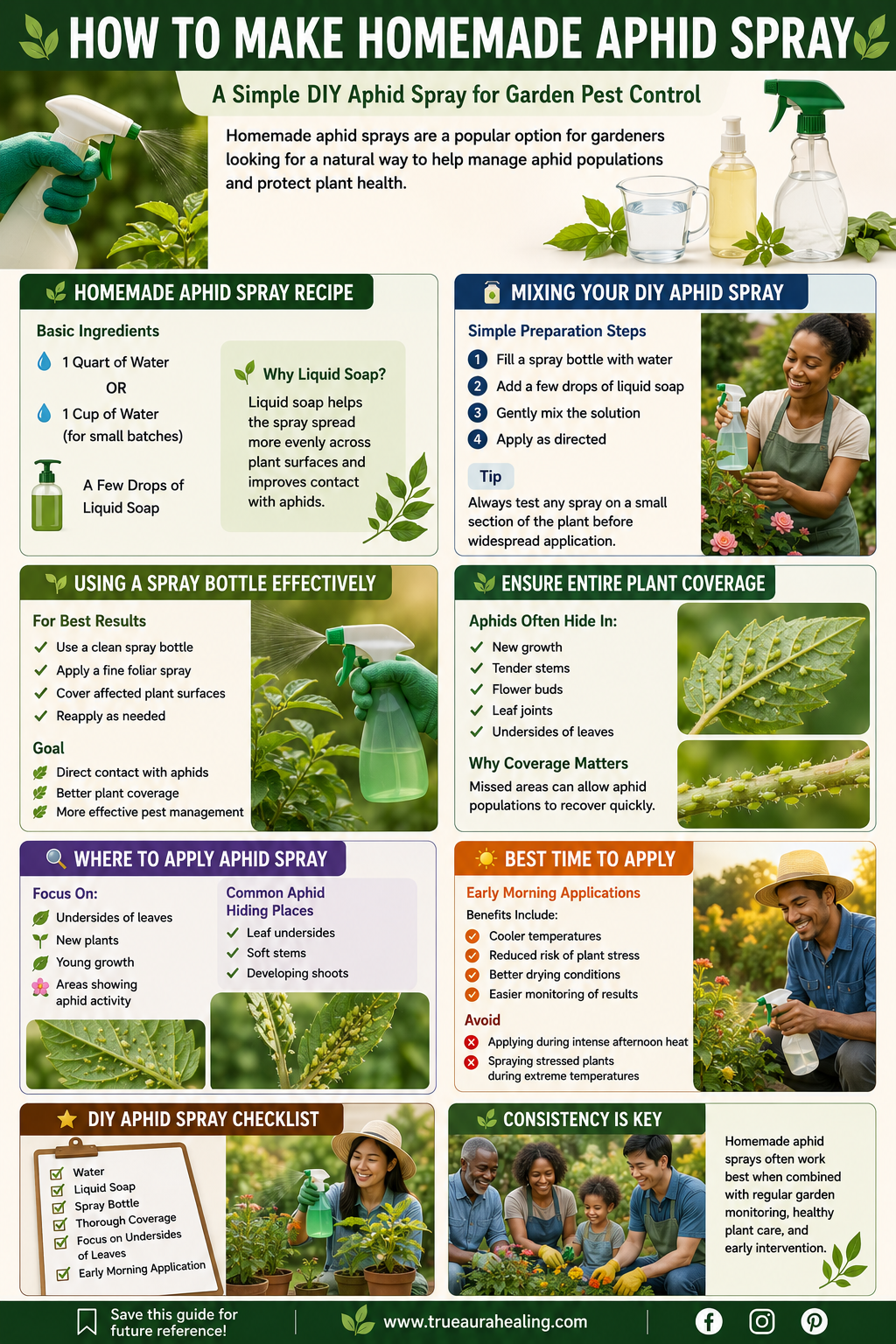
DIY homemade aphid spray infographic showing water, liquid soap, spray bottle instructions, proper plant coverage techniques, aphid hiding locations, and early morning application recommendations.
Other Natural Methods for Aphid Control
Essential oils are only one option for managing aphids naturally, and many gardeners combine multiple methods for better results. Homemade insecticidal soap is a popular choice because it can help control aphid populations when applied consistently and according to directions. A strong jet of water can physically remove aphids from leaves and stems, reducing infestations without the use of pesticides. Horticultural oils, including products derived from vegetable oils and cottonseed oil, are commonly used in garden pest management, while garlic extract is often included in natural garden support strategies due to its strong aroma and traditional use in pest deterrence.
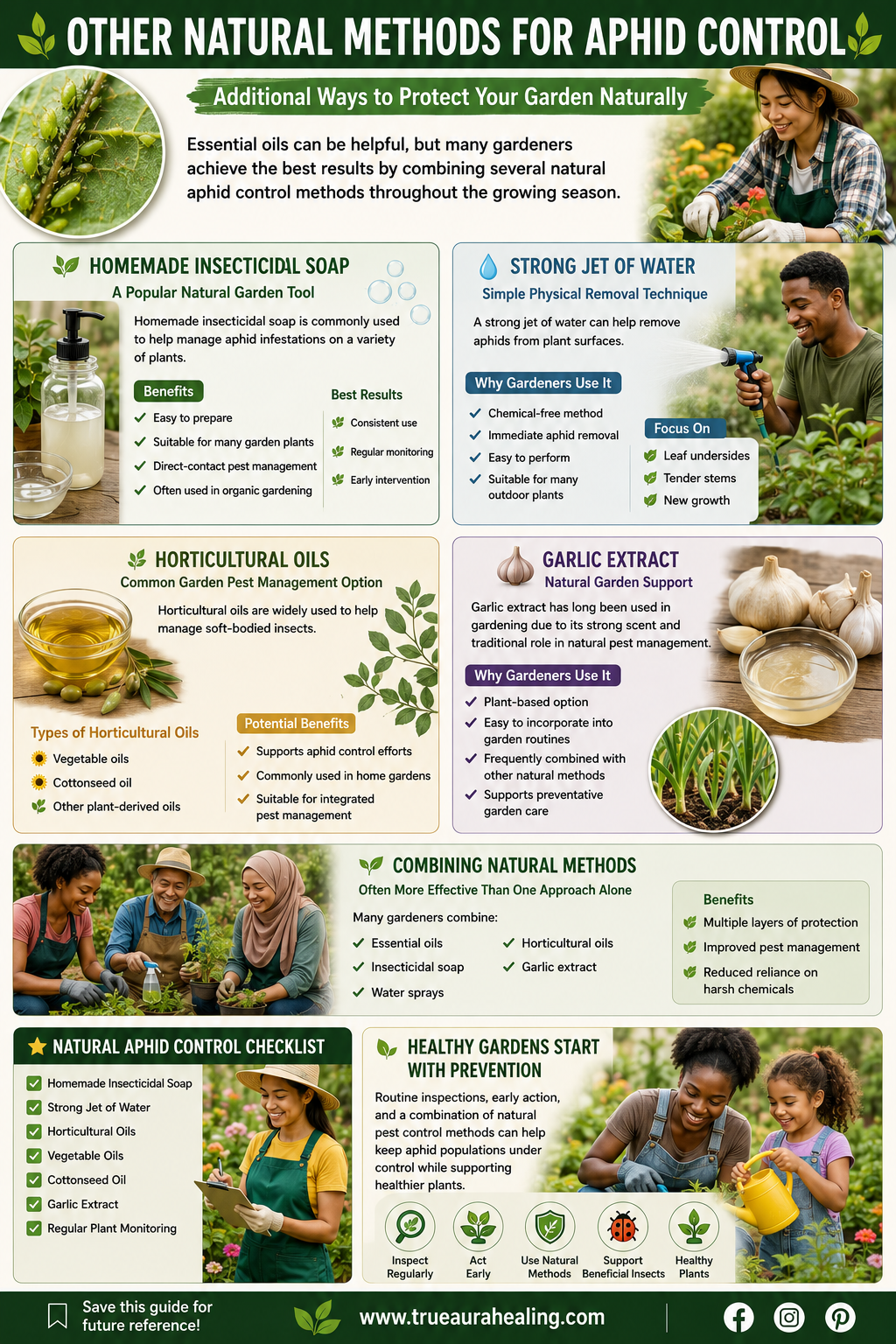
Natural aphid control infographic featuring homemade insecticidal soap, strong water sprays, horticultural oils, garlic extract, beneficial gardening practices, and integrated pest management techniques.
Beneficial Insects That Help Control Aphids
Not all insects in the garden are harmful. Beneficial insects, such as ladybug larvae, are natural predators that feed on aphids and can help reduce pest populations without the need for chemical treatments. Gardeners can attract and support these helpful insects by planting sweet alyssum, incorporating companion plantings, and using trap crops to create a more balanced garden ecosystem. Throughout the growing season, paying attention to the different larval stages of beneficial insects can help ensure that nature's pest control team remains active and effective in keeping aphid numbers under control.
Preventing Future Aphid Problems
Preventing aphid problems is often easier than dealing with a large infestation after it becomes established. Simple preventative measures such as regular garden monitoring, using a physical barrier when appropriate, and inspecting plants frequently can help identify issues before they spread. New plants, indoor plants, and fruit trees are especially important to monitor because aphids are often attracted to tender new growth. Consistent care, proper watering, and good growing conditions support healthy plant growth, making plants more resilient and better able to tolerate pest pressure throughout the growing season.
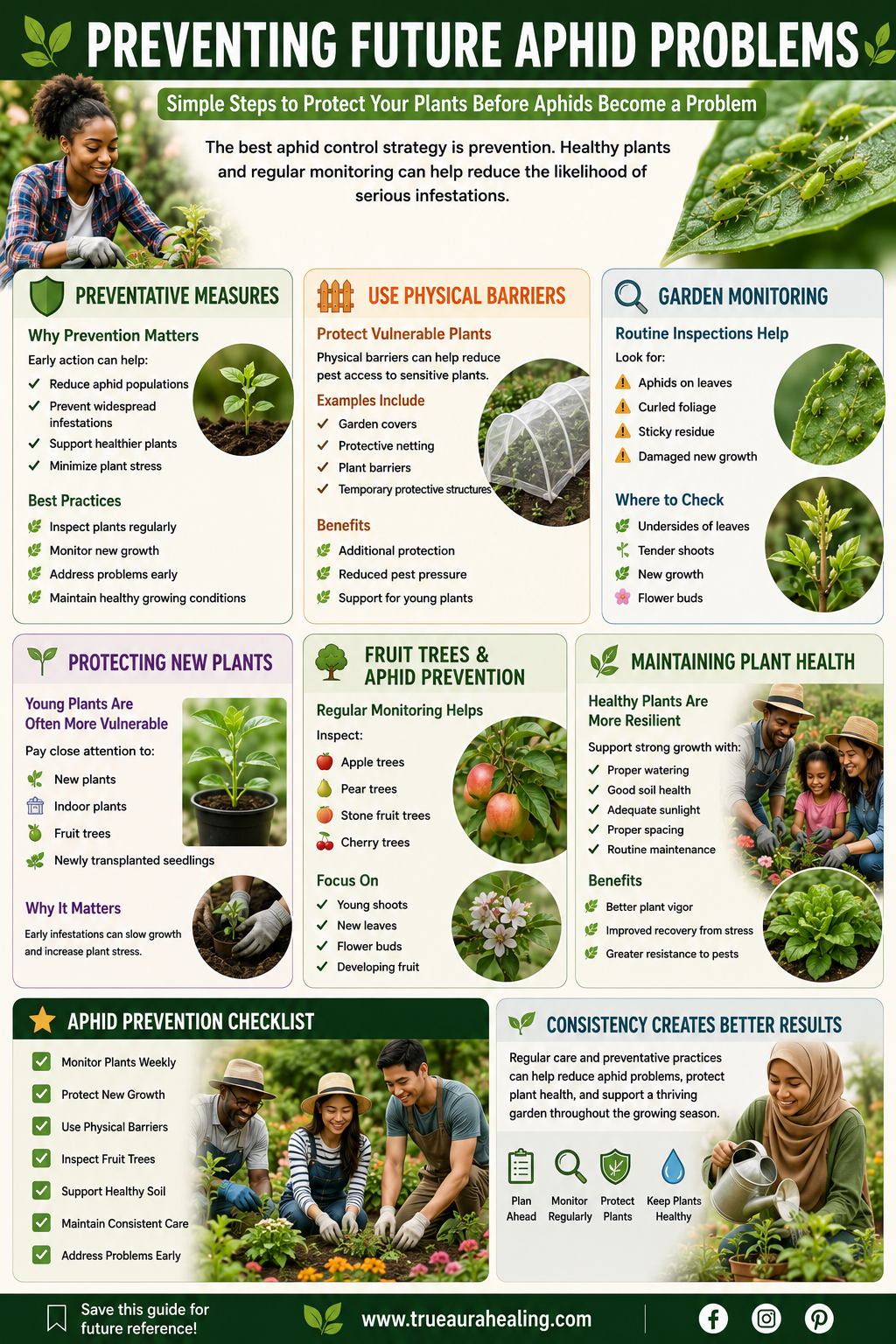
Aphid prevention infographic showing garden monitoring, physical barriers, healthy plant care, fruit tree inspections, new plant protection, and preventative gardening practices to reduce aphid infestations.
Common Mistakes to Avoid
Even natural aphid control methods can be less effective when common mistakes are overlooked. Applying too much spray, failing to achieve direct contact with aphids, or missing the undersides of leaves where aphids often gather can reduce the effectiveness of treatments. Garden management mistakes, such as overlooking early signs of infestation or ignoring beneficial insects, may allow aphid populations to grow unchecked. For the best results, combine multiple control strategies and monitor plants regularly rather than relying on a single treatment method.
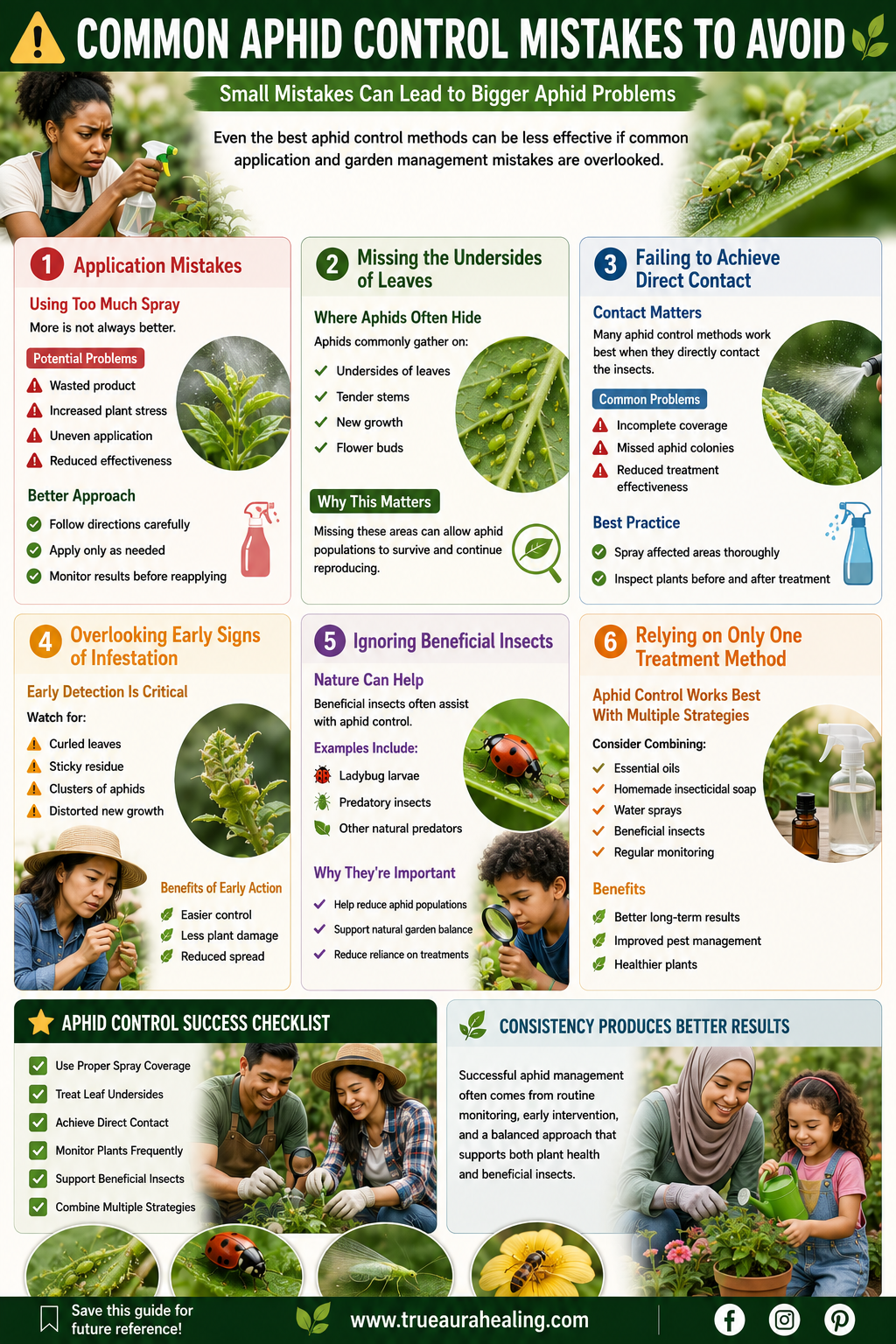
Common aphid control mistakes infographic explaining overspraying, poor leaf coverage, missing aphid colonies, ignoring beneficial insects, and relying on a single pest control method.
Creating an effective aphid control plan often involves using multiple natural strategies rather than relying on a single solution. Combining essential oils with beneficial insects, regular garden monitoring, and properly applied homemade aphid spray can help reduce aphid populations while supporting a healthier garden ecosystem. This approach may also help reduce reliance on harsh chemicals and encourage more sustainable pest management practices. By focusing on prevention, early intervention, and overall plant health, gardeners can support stronger, more resilient plants throughout the growing season.