
Read this before planting a tree In clay soil
Planting a tree in clay soil can be challenging because this soil type tends to hold water longer and drains more slowly than many other soils. Heavy clay soil can create conditions that limit root growth, increase the risk of root rot, and make it difficult for young trees to establish healthy root systems. Unlike sandy soil or loamy soil, clay particles are tightly packed together, affecting both water movement and air circulation underground. Fortunately, with proper planting techniques, improved drainage, and thoughtful soil preparation, many trees can thrive in clay soil and develop into healthy, long-lived additions to the landscape.
Understanding Clay Soil
Heavy clay soil is a dense type of soil made up of very small particles that hold water and nutrients effectively but often drain slowly. While this can be beneficial during dry periods, clay soil can also restrict root growth by limiting the amount of oxygen available to developing roots. One of the most common problems associated with clay soil is poor drainage, which can leave roots sitting in wet soil and increase the risk of root rot. Compared to sandy soil, which drains quickly, and loamy soil, which offers a balance of drainage and moisture retention, heavy clay soil requires careful management to support healthy tree growth. Understanding your native soil is the first step toward choosing the right planting techniques and creating better growing conditions.
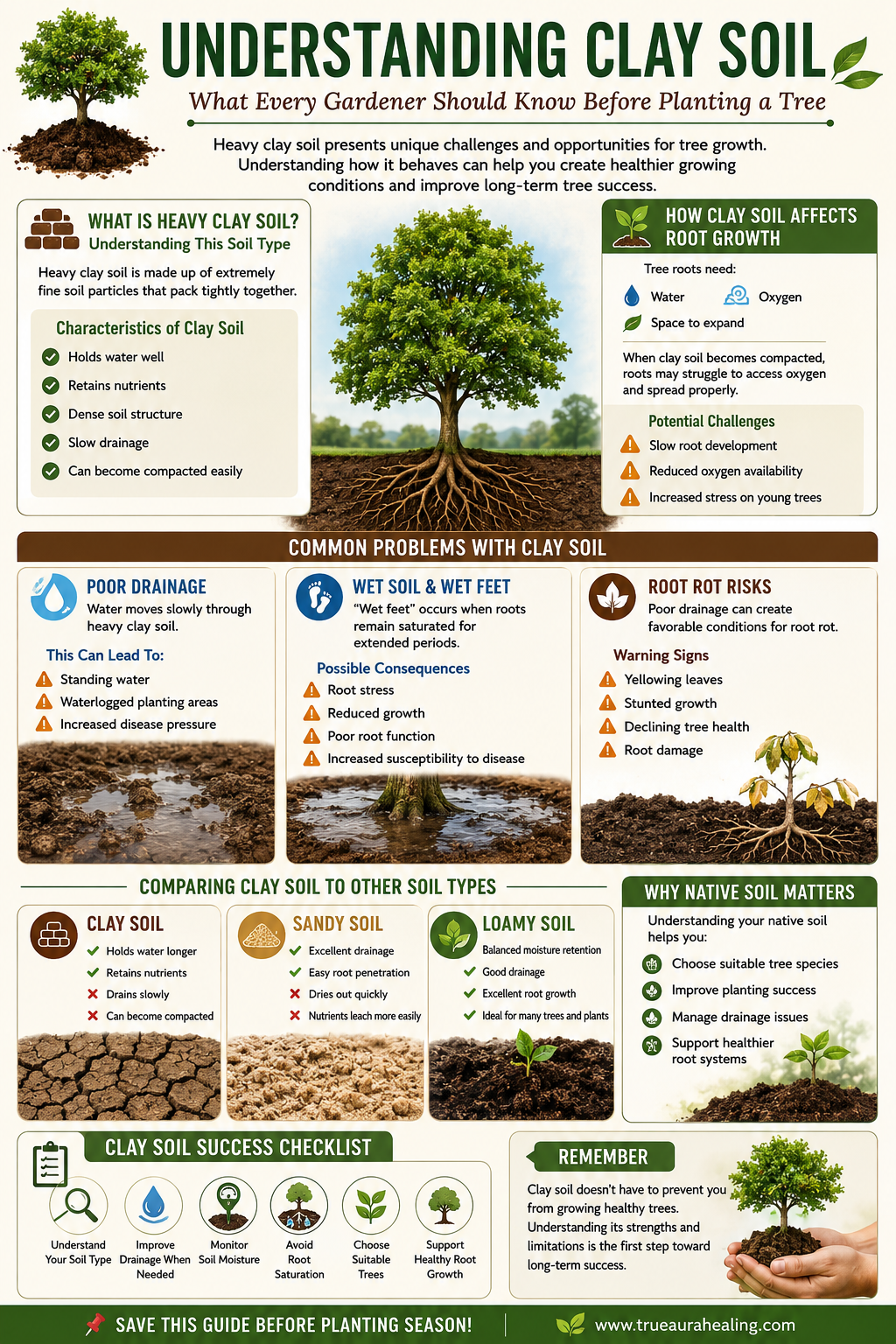
Understanding clay soil infographic explaining heavy clay soil characteristics, poor drainage, root rot risks, wet soil conditions, and comparisons between clay soil, sandy soil, and loamy soil for successful tree planting.
Why Drainage Matters Before Planting
Drainage is one of the most important factors to consider before planting a tree in clay soil. Poor drainage can leave roots sitting in wet soil for extended periods, increasing the risk of root rot and reducing the amount of oxygen available to the root system. Over time, these conditions can weaken a tree, slow its growth, and negatively impact its long-term survival. Improving drainage through the addition of organic matter and practices that enhance soil structure can create healthier growing conditions and support stronger root development.
How to Prepare Clay Soil Before Planting
Preparing clay soil before planting can significantly improve the long-term health and success of your trees. Incorporating organic matter, such as lots of compost, helps improve soil structure, increase oxygen availability, and support beneficial soil organisms. When working with clay soil, it's important to amend a broad area of the surrounding soil rather than creating a small pocket of improved soil within the native soil. Applying wood chips as mulch can further support soil health by regulating moisture levels, reducing temperature fluctuations, and gradually contributing additional organic matter as they break down.
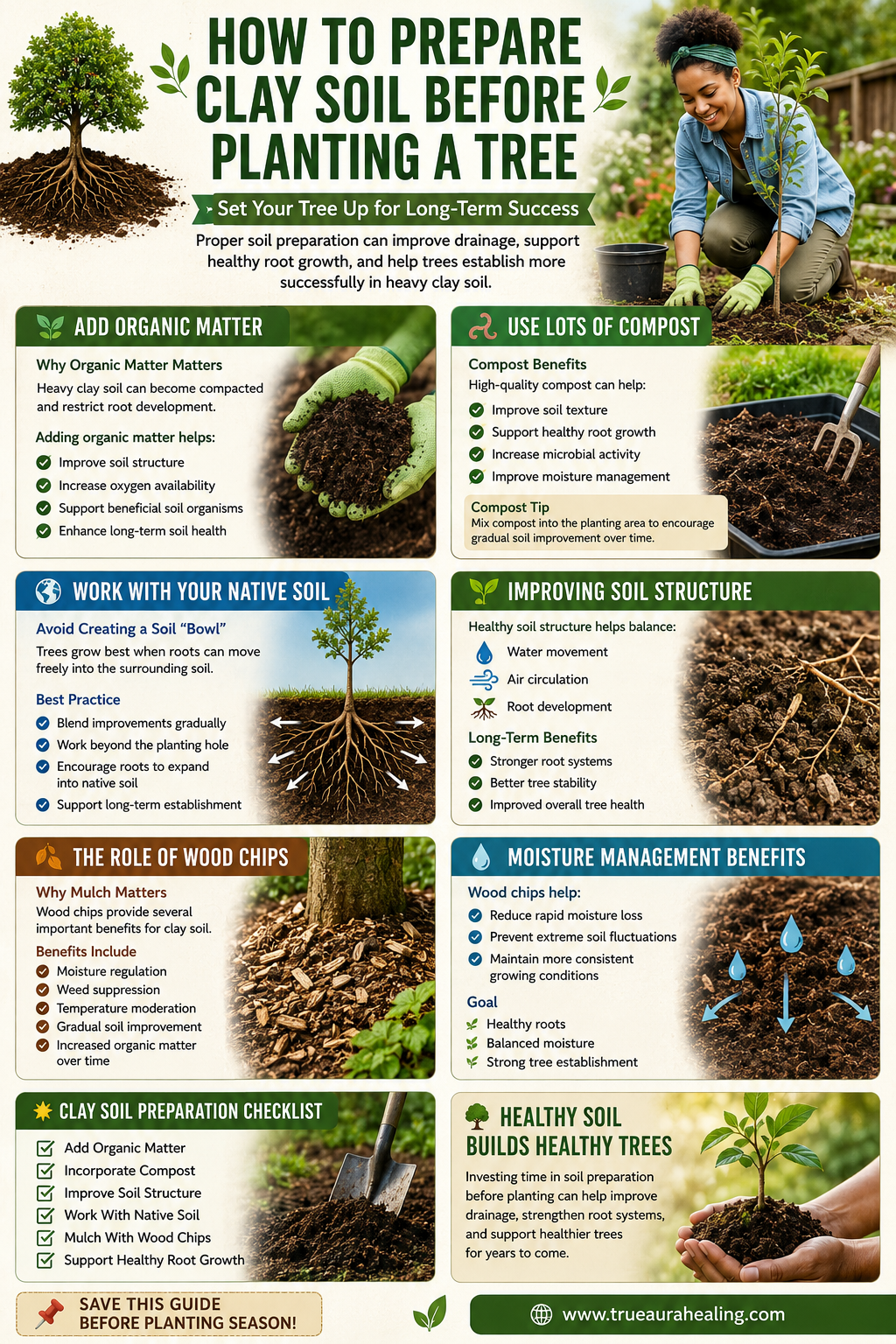
Clay soil preparation infographic showing how organic matter, compost, native soil management, wood chips, and soil structure improvements help support healthy tree root development and drainage.
Digging the Right Planting Hole
The planting hole plays a critical role in helping a tree establish a strong and healthy root system. A properly sized planting hole encourages roots to grow outward into the surrounding soil rather than becoming confined to a small area. One of the most common planting mistakes is placing a tree too deep, which can reduce oxygen availability around the roots and increase the risk of disease. In clay soil, improper planting depth can also contribute to drainage problems, creating conditions that encourage root rot and negatively affect long-term tree health.
Best Trees for Clay Soil
Many fruit trees can successfully grow in clay soil when proper planting techniques and drainage considerations are taken into account. Apple trees, pear trees (Pyrus communis), persimmon trees, plum trees, cherry trees, quince trees, and some citrus trees are often considered adaptable options for challenging soil conditions. While these trees can tolerate heavier soils, selecting an appropriate planting site and addressing drainage concerns remain important for healthy root development. Understanding each tree's growing requirements can help gardeners choose varieties that are more likely to thrive in their landscape.
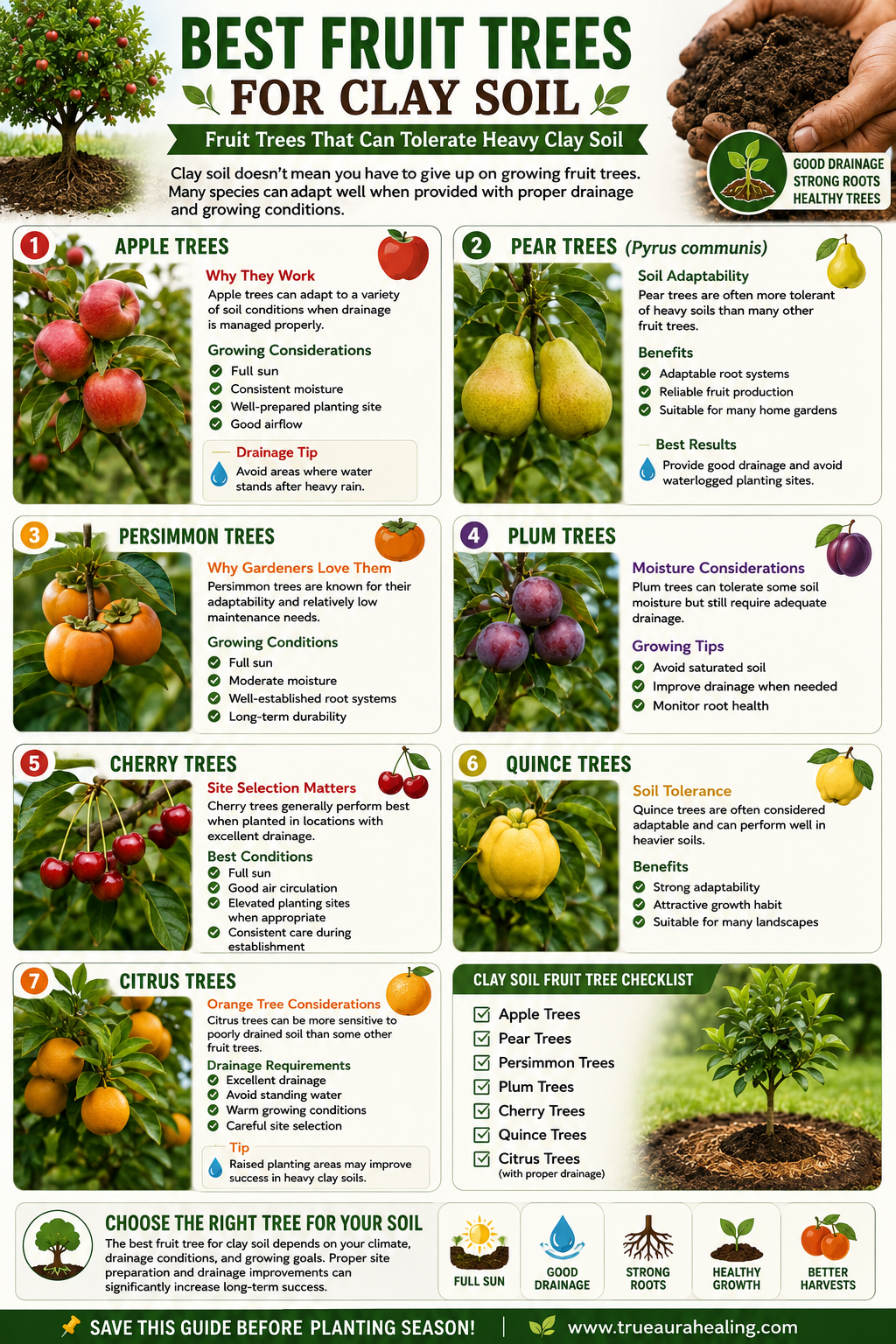
Fruit trees for clay soil infographic featuring apple trees, pear trees, persimmon trees, plum trees, cherry trees, quince trees, and citrus trees that can adapt to heavy clay soil conditions.
Choosing the Right Tree for Your Landscape
Choosing the right tree for your landscape involves more than simply selecting a favorite variety. Factors such as available space, soil conditions, sunlight, and drainage all play important roles in long-term tree health and success. Small tree selections can be excellent choices for limited-space landscapes, while evergreen trees provide year-round color, privacy, and visual interest. By matching suitable plants to your site's specific growing conditions, you can create a healthier and more resilient landscape that thrives for years to come.
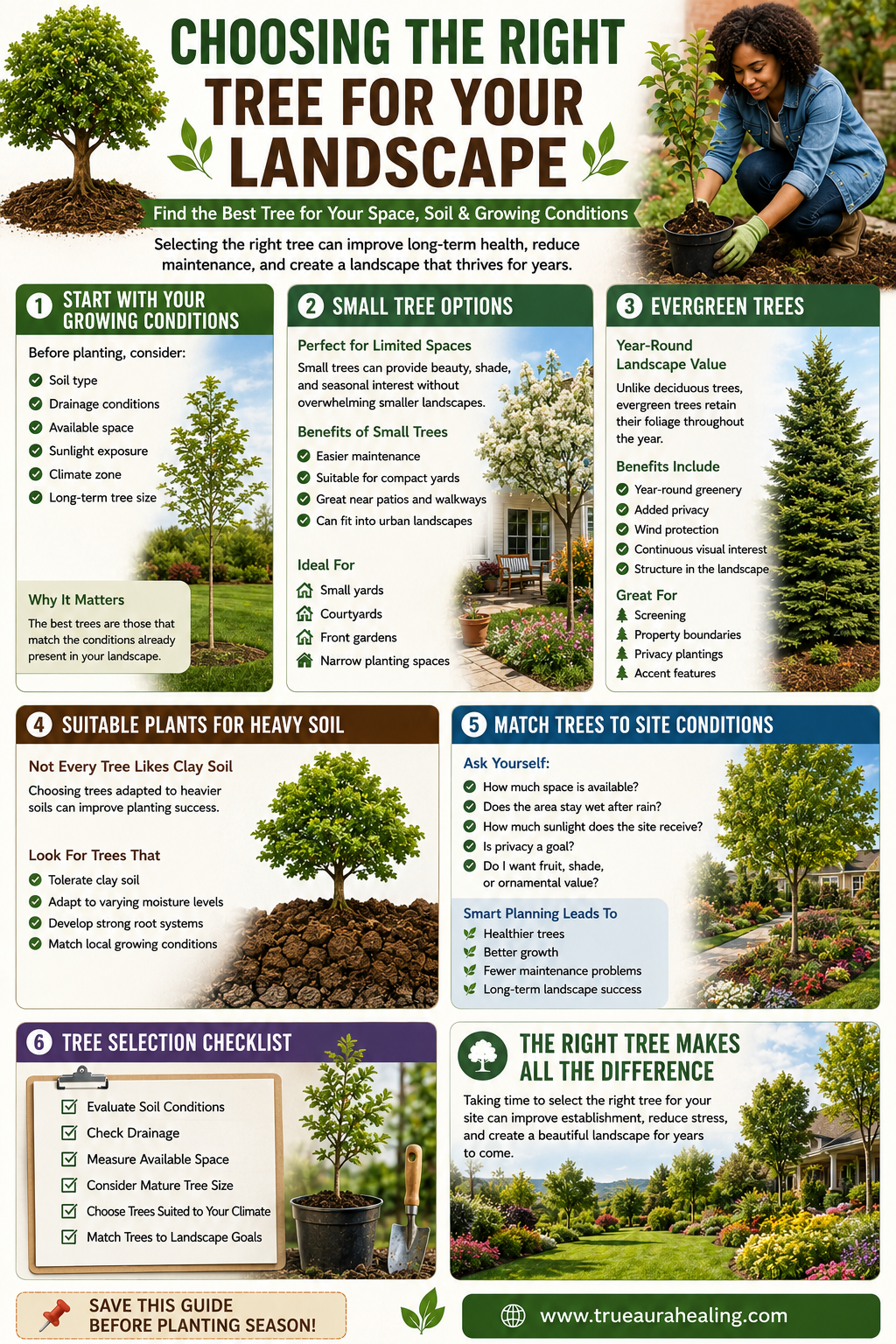
Landscape tree selection infographic explaining how to choose small trees, evergreen trees, and clay soil tolerant trees based on available space, drainage conditions, sunlight, climate, and landscape goals.
Caring for Young Trees in Clay Soil
Young trees require special attention during their establishment period, especially when planted in clay soil. Proper water management is essential because newly developing roots need consistent moisture without becoming waterlogged. One of the biggest threats to young trees is "wet feet," a condition that occurs when roots remain saturated for extended periods and are deprived of oxygen. By monitoring moisture levels carefully and encouraging healthy root development, gardeners can help young trees become stronger, more resilient, and better adapted to their growing environment.
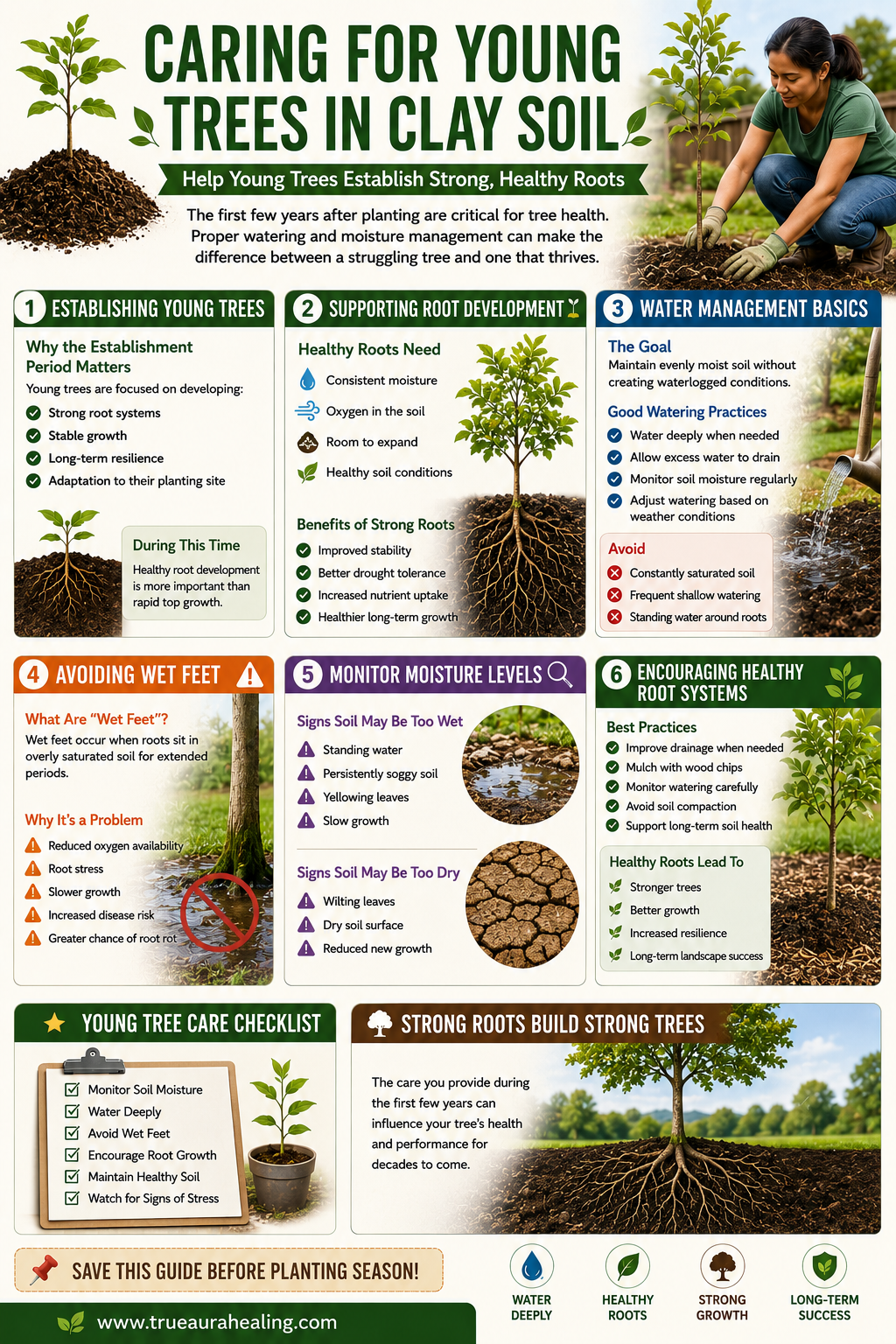
Young tree care infographic covering root development, proper watering practices, moisture monitoring, avoiding wet feet, healthy root systems, and establishing trees successfully in clay soil.
Seasonal Considerations
Timing and seasonal conditions can have a significant impact on a tree's ability to establish successfully in clay soil. Late summer is often a good time to evaluate drainage patterns and begin soil preparation, giving you an opportunity to address potential issues before planting. Throughout the year, it's important to monitor soil conditions because clay soil can behave very differently during wet and dry seasons. Regular observation of moisture levels, seasonal drainage changes, and overall soil health can help support long-term tree growth and reduce the risk of root-related problems.
Common Problems and Solutions
One of the most common challenges when growing trees in clay soil is root rot, a condition often caused by poor drainage and prolonged exposure to wet soil. Early warning signs may include yellowing leaves, slow growth, leaf drop, and an overall decline in tree health. Preventing root rot begins with improving drainage, monitoring soil moisture, and avoiding overwatering. Soil improvement techniques such as adding organic matter, applying wood chip mulch, and selecting appropriate planting locations can help create healthier growing conditions and support long-term tree success.
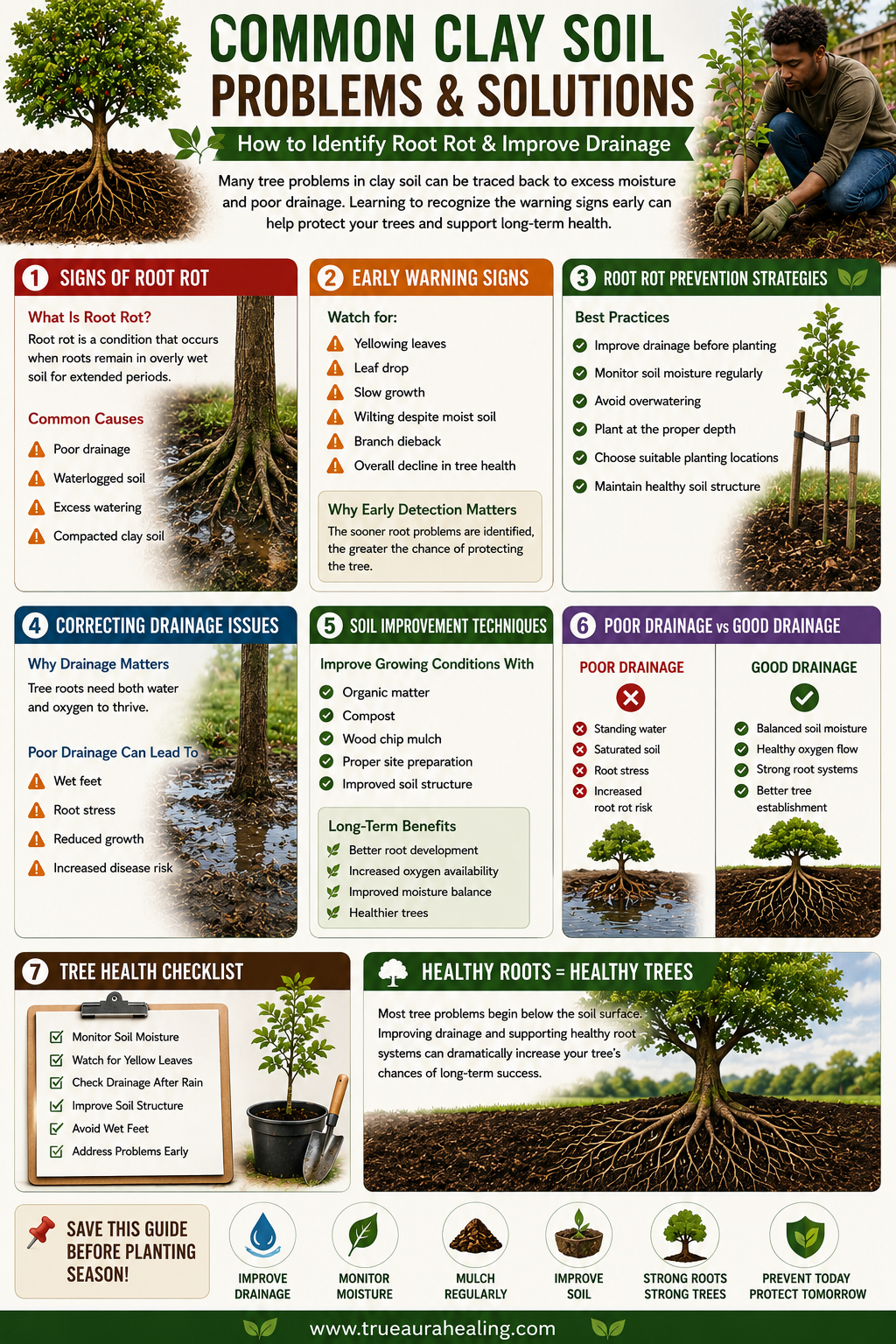
Clay soil troubleshooting infographic showing signs of root rot, poor drainage problems, wet feet, yellowing leaves, soil improvement techniques, and strategies for creating healthy tree root systems.
Heavy clay soil may present challenges, but it doesn't have to prevent you from growing healthy, productive trees. By improving soil conditions with organic matter, promoting proper drainage, and selecting tree species that are well-suited to your soil type, you can create an environment that supports strong root development and long-term success. Taking the time to build healthy soil before planting often pays dividends for years to come through healthier growth and improved resilience. With the right preparation and ongoing care, trees can thrive even in difficult clay soil conditions.